
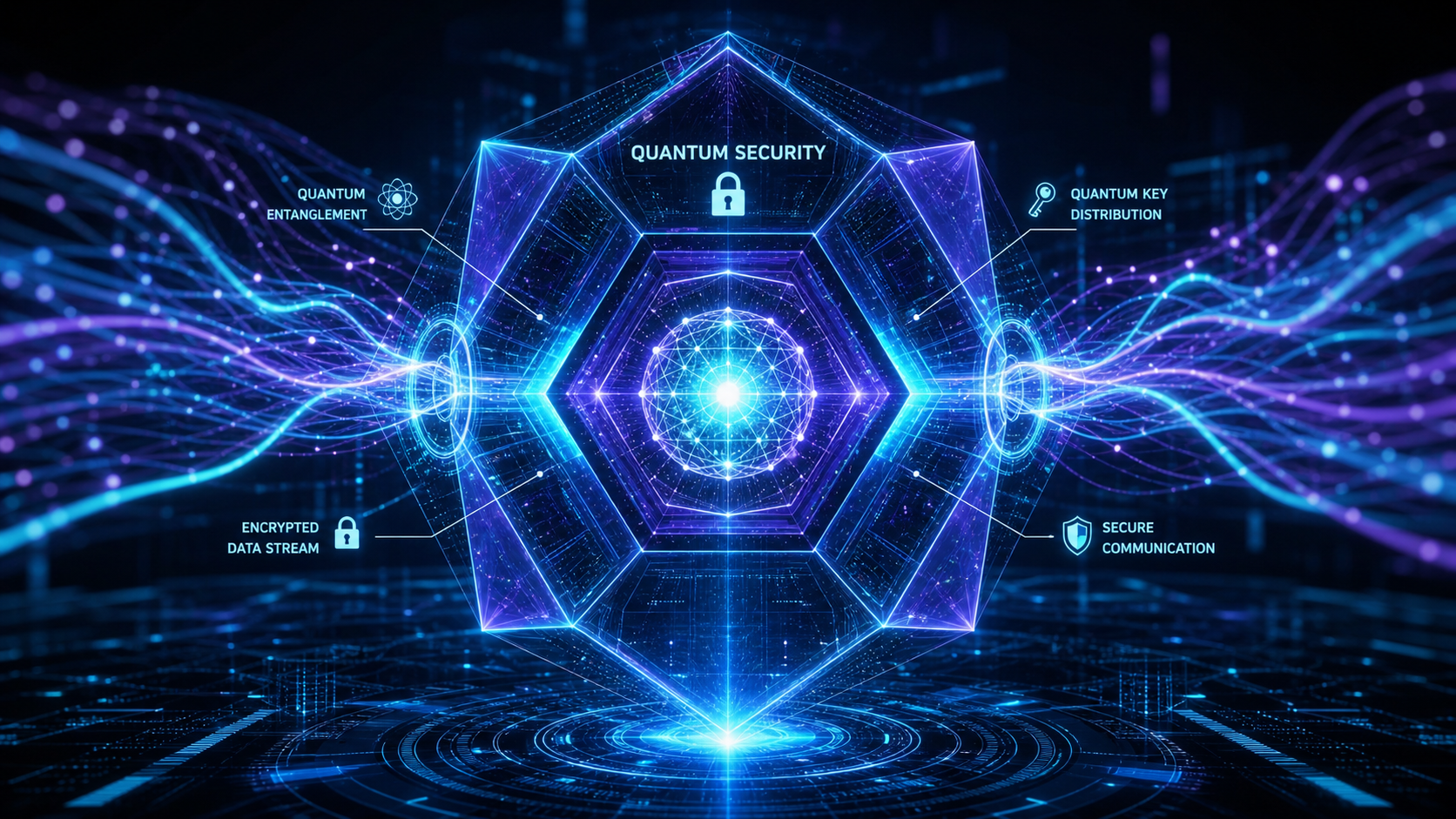
Protecting Data in the Era of Quantum Computing
Picture a future where the strongest digital security we rely on today could be broken in minutes instead of taking centuries. That’s the kind of shift quantum computing could bring to cybersecurity. It doesn’t mean everything will suddenly fall apart, but it does mean we need to start preparing now for how we protect our data.
What is quantum computing?
Quantum computers are not simply faster versions of today’s devices. Instead of using bits that are either 0 or 1, they use quantum bits, or qubits, which can exist in multiple states at the same time. This allows them to process many possibilities simultaneously, making them incredibly powerful for certain types of problems.
At present, quantum computers are still in early stages and have limitations. However, progress is consistent, and experts believe that within the next couple of decades, they could potentially break much of the encryption that currently secures our digital world.
Why does this matter to everyday users?
Much of the security behind online banking, messaging apps, emails, and other services depends on encryption based on mathematical problems that are too difficult for classical computers to solve quickly. However, quantum algorithms like Shor’s algorithm could solve these problems far more efficiently.
This creates a concern known as “harvest now, decrypt later.” Attackers could collect encrypted data today—such as financial information, medical records, or private communications—and store it until quantum technology becomes powerful enough to decrypt it in the future.
Certain types of data, like health records, long-term agreements, personal memories, and government information, need to remain secure for many years. If protected by encryption that becomes vulnerable, this data could be exposed long after it was originally stored.
How are experts responding?
To address this risk, researchers are developing post-quantum cryptography (PQC), which consists of encryption methods designed to remain secure even against quantum attacks.
Some key approaches include:
- Lattice-based cryptography
- Hash-based signatures
- Code-based cryptography
Multivariate polynomial cryptography
Organizations such as the U.S. National Institute of Standards and Technology (NIST) are actively evaluating and standardizing these methods so that governments and businesses can begin transitioning to stronger protections.
What can individuals do?
You don’t need deep technical expertise to improve your security. A few practical steps can make a significant difference:
These habits reduce your exposure, regardless of how encryption evolves.
What’s happening behind the scenes?
For organizations, moving toward quantum-safe security is a complex, long-term effort. It involves identifying where encryption is used, prioritizing critical data, and gradually testing and implementing new cryptographic methods.
Some are already adopting hybrid approaches that combine traditional encryption with quantum-resistant techniques. This allows them to stay protected today while preparing for future threats.
A balanced approach
The goal is to stay prepared, not alarmed. Quantum computing won’t instantly render current systems obsolete, but it does shorten the lifespan of existing encryption methods. By taking proactive steps now, we can transition smoothly rather than reacting under pressure later.
Quantum technology holds enormous promise, from advancing medicine to improving climate research. At the same time, it introduces new responsibilities, especially when it comes to safeguarding privacy and trust in a digital world.
Organizations that act early will be better equipped to protect their data, maintain confidence, and avoid rushed, costly upgrades in the future.
Final Thoughts
Quantum security is not about fear, it’s about foresight. By understanding the risks and adopting quantum-resistant technologies today, organizations can ensure their data remains protected not only against current threats, but also against the challenges of tomorrow.
The future is quantum, and our approach to security must evolve with it.