
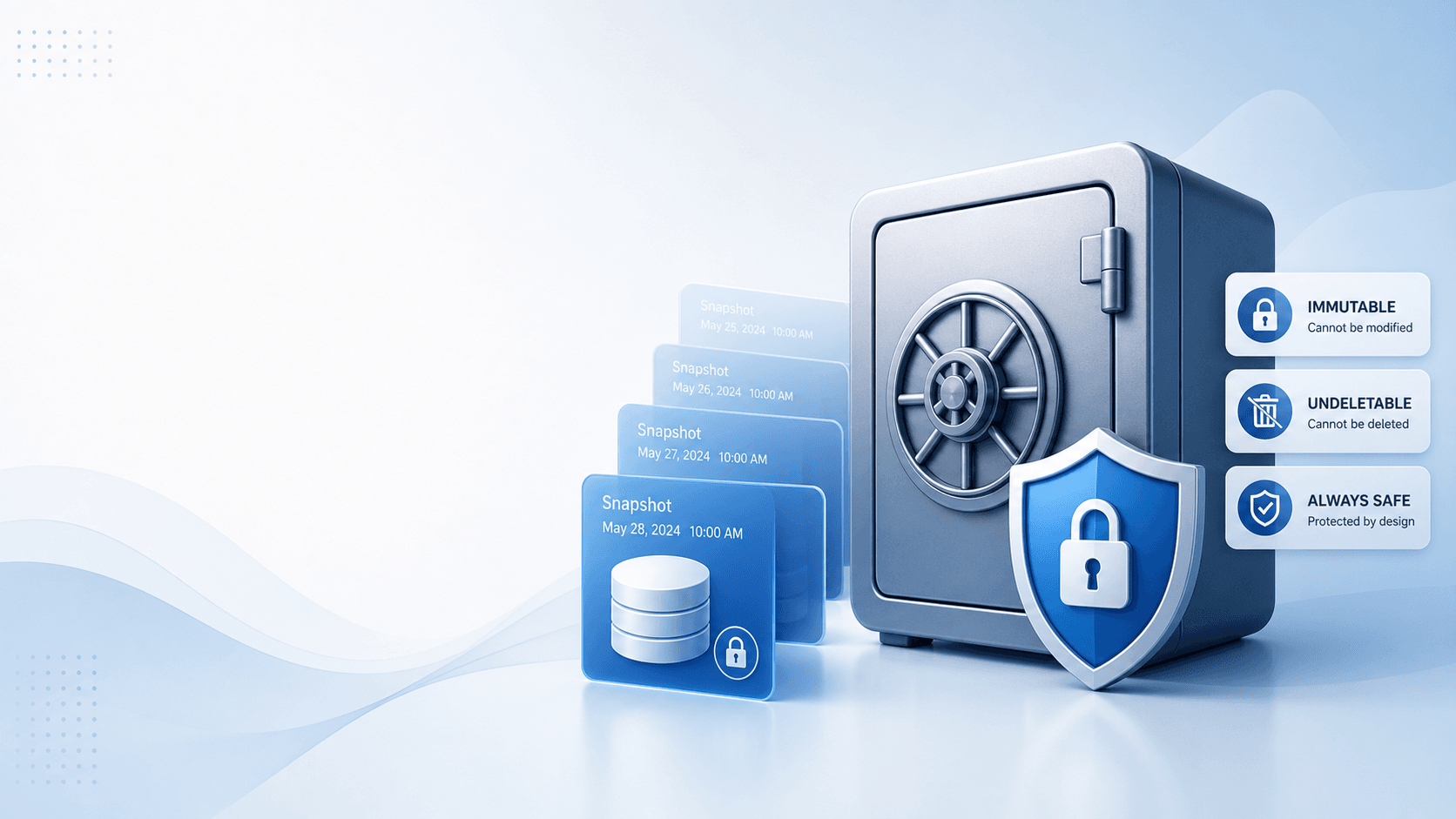
The Ultimate Defense Against Ransomware and Data Loss
In today’s digital-first world, data is no longer just an asset, it is the backbone of business operations. From customer records and financial data to intellectual property and day-to-day operations, organizations rely heavily on data to function and grow. Yet, with the rise of ransomware, cyberattacks, accidental deletions, and system failures, protecting that data has never been more challenging.
This is where immutable backup steps in as a game-changing solution.
Why Immutable Backup Matters
Traditional backups were once considered sufficient. Organizations stored copies of their data on local drives, NAS systems, or even in the cloud, assuming those backups would be there when needed. Unfortunately, modern cyber threats have evolved.
Today’s ransomware doesn’t just target production systems; it actively searches for and encrypts backup repositories as well. Insider threats, human errors, and software vulnerabilities further increase the risk of data loss. In many cases, when backups are compromised, recovery becomes nearly impossible.
Immutable backup changes that equation entirely.
What Is Immutable Backup?
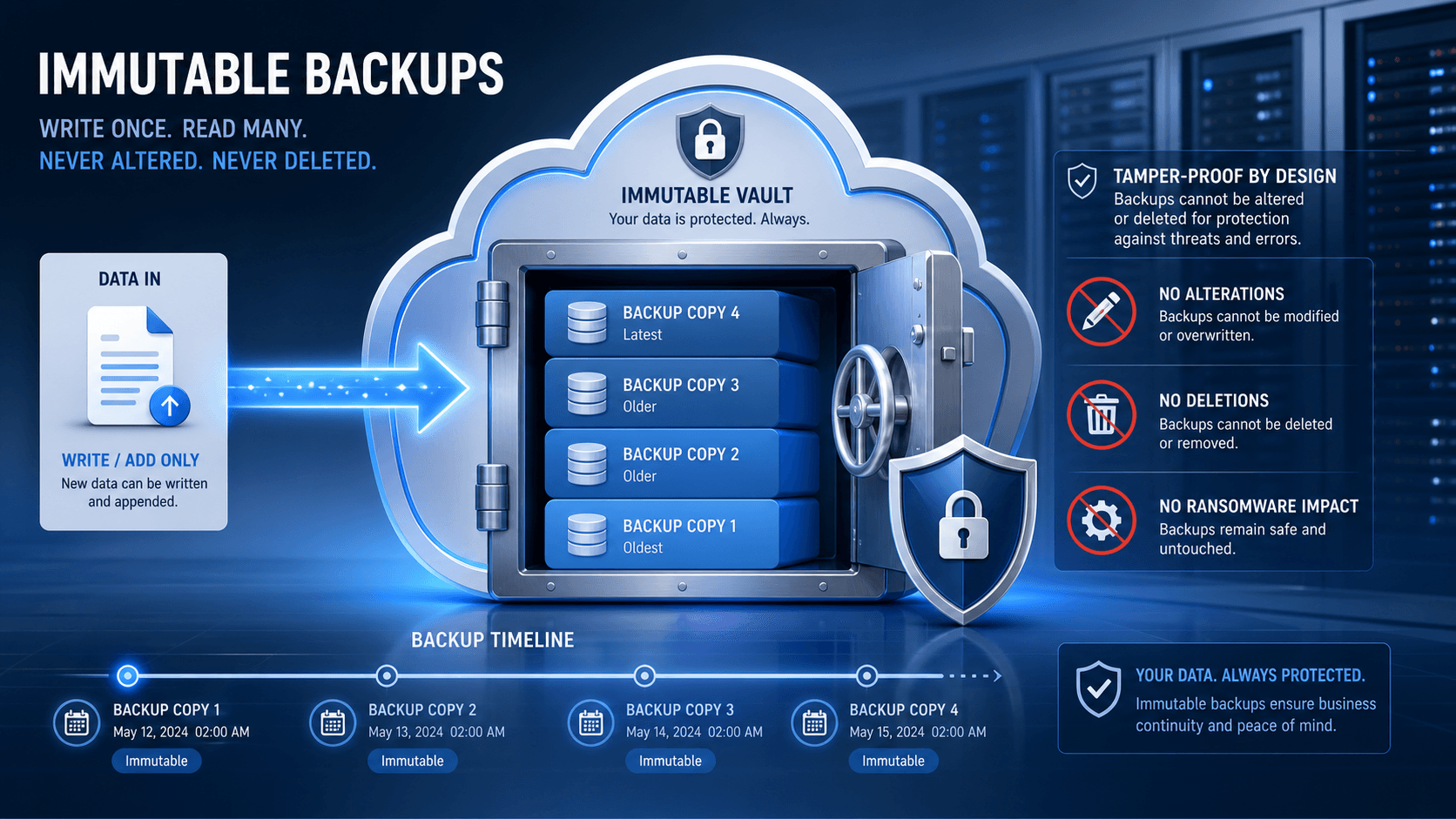
An immutable backup is a copy of data that cannot be modified, deleted, or overwritten once it is created. It is stored in a “write once, read many” (WORM) format for a defined period of time. This means that no matter what happens—whether it is a cyberattack, accidental deletion, or even misuse of administrative privileges—the backup remains intact and recoverable.
How It Works
The concept is simple but powerful:
- Data is backed up from production systems.
- It is stored in an immutable format.
- A retention lock ensures it cannot be changed.
During the retention period, the data is completely protected. It cannot be edited, deleted, or encrypted, even by administrators. This guarantees a clean recovery point when things go wrong.
Key Benefits
Immutable backups provide several critical advantages:
- Strong protection against ransomware, acting as a last line of defense.
- Guaranteed data integrity, since backups cannot be altered.
- Faster and more reliable recovery during incidents.
- Support for regulatory compliance across industries.
- Reduced business risk and improved operational continuity.
For example, if a ransomware attack encrypts both your production systems and standard backups, immutable backups allow you to restore clean data quickly and resume operations with minimal disruption.
Strengthening Your Backup Strategy
Modern best practices recommend the 3-2-1-1-0 rule:
- Keep 3 copies of your data.
- Store them on 2 different types of media.
- Maintain 1 offsite copy.
- Ensure 1 copy is immutable or offline.
- Aim for 0 errors through regular verification.
The addition of an immutable copy significantly strengthens your defense against data loss and cyber threats.
Where is it Used
Immutable backups are now widely adopted across different scenarios:
- Protecting enterprise workloads such as databases, applications, and virtual machines.
- Securing cloud-native environments with immutable object storage.
- Meeting compliance and audit requirements.
- Enabling reliable disaster recovery after cyber incidents or system failures.
Things to Keep in Mind
While powerful, immutable backups are not without considerations:
- Longer retention periods can increase storage costs.
- Locked data cannot be modified until the retention period expires.
- Recovery processes must be well-planned and tested.
- Integration with existing systems may require adjustments.
Final Thoughts
As cyber threats become more sophisticated, relying on traditional backup methods alone is no longer enough. Immutable backup adds a critical layer of protection by ensuring that your data remains untouchable, even in the worst-case scenario.
In a world where downtime can lead to significant financial and reputational damage, immutable backup is quickly moving from a “nice-to-have” to a business necessity. Organizations that adopt it as part of a comprehensive data protection strategy will be far better equipped to handle whatever comes next.
Personnel at Dual Layer IT services can assist you with your data backup strategies.