
Why Clear Ownership of Important Accounts Matters
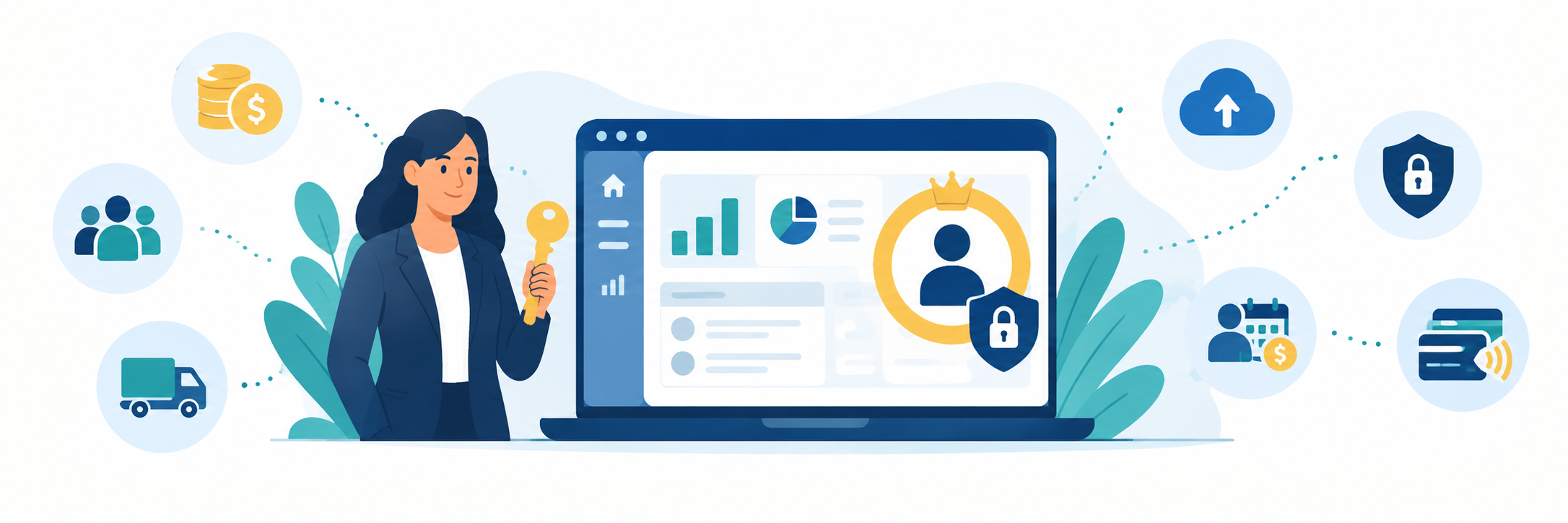
Every organization relies on a small number of critical accounts, including bank accounts, key customer relationships, strategic suppliers, cloud platforms, domain registrations, payroll obligations, and payment systems. These accounts keep the business operating, and when ownership is unclear, minor issues can quickly become costly surprises.
Assigning clear ownership ensures that every critical account has a designated person or role responsible for its accuracy, security, performance, and ongoing administration. It is one of the simplest and most effective controls an organization can implement.
What Account Ownership Means
Account ownership is the formal assignment of responsibility for an account to a specific individual, team, or role. It answers a fundamental question: who is responsible when something goes wrong, or when an account must be reviewed, renewed, reconciled, or secured?
For finance teams, the account owner may reconcile balances, investigate discrepancies, explain unusual transactions, and maintain supporting documentation. For technology and operations teams, ownership may include managing administrator access, renewals, security configurations, and recovery arrangements.
Why It Matters
Critical accounts often present significant risk. A missed domain renewal can take a website offline. Uncontrolled access to a cloud platform can expose sensitive information. An unreconciled bank account can conceal fraud or errors. Poorly managed customer relationships can put revenue at risk.
Clear ownership strengthens:
- Accountability: Everyone knows who makes decisions and resolves issues.
- Security: Access rights, passwords, multi-factor authentication, and recovery methods are actively managed.
- Continuity: A backup owner can take over during leave, resignation, or an emergency.
- Audit readiness: Balances, controls, and supporting evidence are clearly documented.
- Customer experience: Customers avoid unclear handoffs and delayed responses.
- Decision-making: Leaders can identify which accounts are healthy, exposed, or overdue for attention.
The Risks of Unclear Ownership
The phrase “everyone owns it” often means that no one is truly accountable. When responsibilities are shared without defined roles, problems may be noticed by several people but resolved by none.
Warning signs include:
- No one knows who controls a domain, cloud platform, or payment system.
- Former employees still have administrative access.
- Reconciling items remain unresolved for extended periods.
- Passwords or recovery email addresses are linked to former employees.
- Customer issues move between teams without a clearly responsible person.
- Important renewals are missed because no one monitors the deadlines.
Build an Ownership Matrix
A useful starting point is an account ownership matrix. For customer accounts, it may include the account manager, renewal date, decision-makers, support contacts, renewal risk, and the senior leader accountable for the relationship.
Relationship ownership is especially important. An account may have a designated technical or administrative owner while the underlying customer relationship gradually deteriorates because no one is responsible for maintaining it.
Separate the Owner, Reviewer, and Backup
A well-designed ownership model does not place every responsibility with one person. Separating duties reduces errors and strengthens oversight.
- Primary owner: Manages the account, prepares reconciliations or reviews, explains activity, and resolves exceptions.
- Reviewer: Independently verifies completeness, supporting evidence, outstanding items, and compliance with policy.
- Backup owner: Maintains continuity when the primary owner is unavailable.
- Accountable leader: Maintains overall visibility and makes decisions about significant risks or escalations.
This structure reduces dependence on one individual and ensures that work is not completed without appropriate review.
Make Ownership Operational
An ownership matrix is effective only when it is kept current. Organizations should review account ownership following reorganizations, acquisitions, staff changes, system migrations, or updates to the chart of accounts.
Useful practices include:
- Review access rights and active sessions regularly.
- Require multi-factor authentication for critical systems.
- Use company email addresses for account recovery.
- Remove access promptly when employees leave.
- Track the age and owner of unresolved reconciling items.
- Set renewal reminders well before important deadlines.
- Update relationship maps for key customers regularly, rather than only when problems arise.
Conclusion
Any account that can affect cash, customers, compliance, security, reputation, or business continuity should have:
- One primary owner.
- One independent reviewer.
- One backup owner.
- A defined review frequency.
- Clear evidence requirements.
This simple discipline transforms account management from an informal responsibility into a dependable control system. Clear ownership cannot eliminate every risk, but it ensures that when risks arise, the right person identifies them, understands their implications, and takes action promptly.